
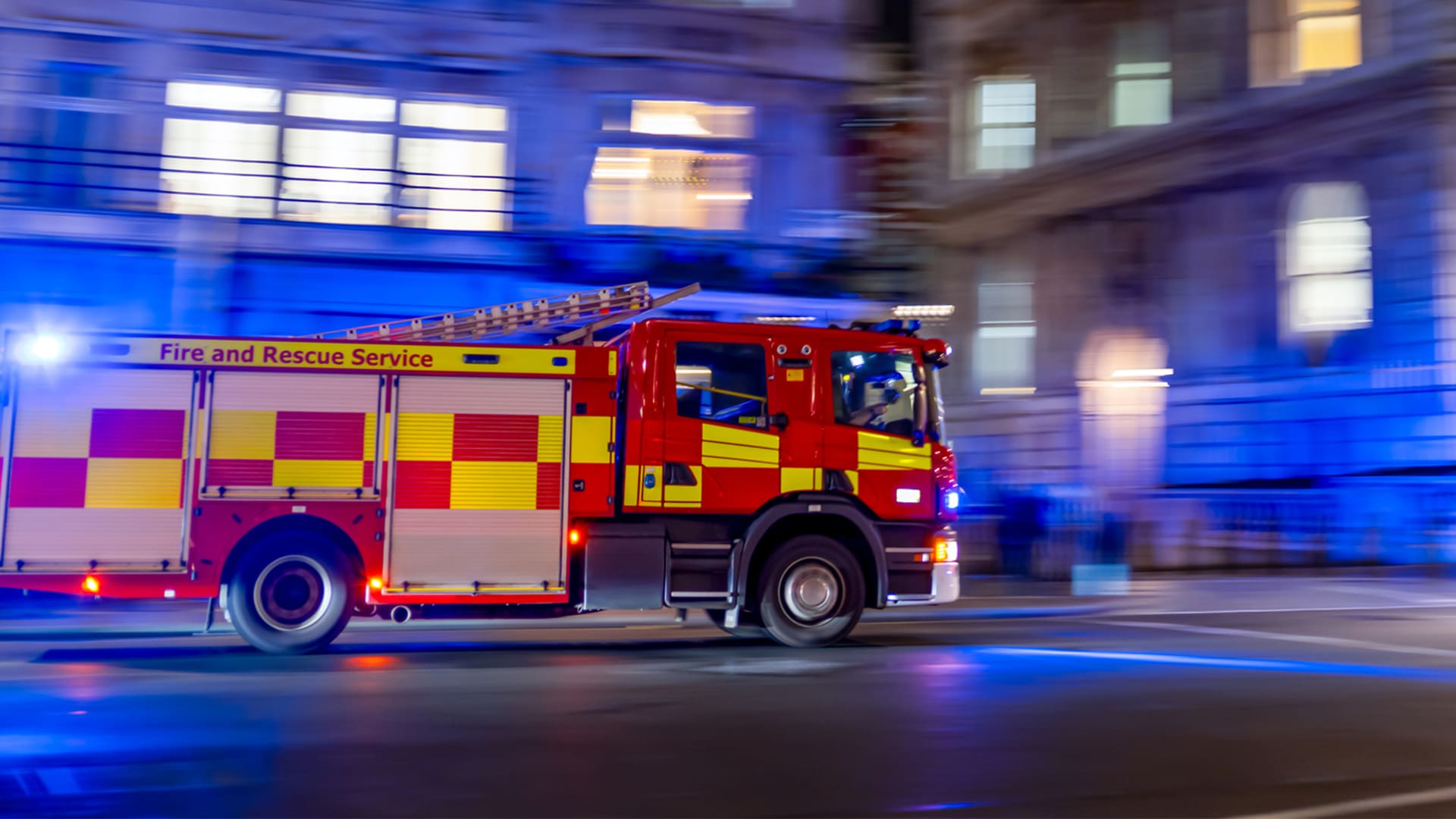
First Responders, Second Line of Defence: Cybersecurity in Emergency Services
28 September
When an emergency call comes in, there is no such thing as “we’ll deal with it tomorrow”.
A patient needs an ambulance.
A fire needs a response.
A vulnerable person needs help.
A police officer needs information.
For emergency services, availability isn’t simply a technology requirement. It can be a matter of public safety.
That changes the way we should think about cybersecurity.
In many organisations, a cyberattack means systems go offline, employees are disrupted and productivity takes a hit.
In emergency services, the consequences can be much more immediate.
If systems are unavailable, responders may lose access to information they rely on. If communications are disrupted, coordination becomes harder. If critical infrastructure is compromised, the organisation may have to revert to manual processes at exactly the moment it is under the greatest pressure.
The question isn’t simply whether emergency services can prevent a cyberattack.
It is:
Can they continue to respond when the technology they depend on is under attack?
The Emergency Services Attack Surface Is Growing
Emergency services have never operated in a simple technology environment.
Today, that environment is becoming even more interconnected.
Control rooms, dispatch systems, mobile devices, radios, vehicles, cameras, databases, cloud services, remote access, clinical systems, building management technology and third-party platforms can all form part of the wider digital ecosystem.
And every connection creates another relationship that needs to be secured.
The challenge is that many of these systems exist for very good reasons.
A paramedic needs information while travelling to an incident.
A control room needs real-time visibility.
A police officer needs access to intelligence while away from the station.
A fire service may rely on connected technology to coordinate operations.
Removing connectivity isn’t the answer.
The challenge is making that connectivity secure, resilient and recoverable.
The Most Dangerous Assumption: “The Critical Systems Are Isolated”
One of the most common assumptions in cybersecurity is that critical systems are protected because they are separate.
Perhaps a dispatch system sits on a dedicated network.
Perhaps operational technology is isolated.
Perhaps an important application isn’t directly exposed to the internet.
But isolation on a network diagram doesn’t necessarily mean isolation from an attacker.
Attackers don’t necessarily need direct access to a critical system.
They can look for a route.
A compromised user account may provide access to one environment.
That environment may have connectivity to another.
A vulnerable server may provide another step.
A trusted supplier account could provide privileged access.
Eventually, a series of individually legitimate connections can create an attack path into something that was supposed to be protected.
That’s why emergency services need to think beyond “What is exposed?”
They need to ask:
“What could an attacker reach if they compromised something else first?”
In an Emergency, Seconds Matter. So Does Cybersecurity.
Emergency services are built around speed.
Technology is supposed to make responses faster.
But cybersecurity controls that aren’t designed around operational realities can create friction.
Security teams may want additional authentication.
Operational teams may need immediate access.
IT teams may want systems patched immediately.
Operational leaders may be concerned about disrupting critical services.
These aren’t opposing objectives.
They are competing requirements that need to be designed for together.
The answer isn’t to weaken security because operations are important.
It’s to build security into the architecture in a way that supports operational resilience.
Assume the Breach
Emergency services should plan for the possibility that an attacker will eventually get through.
That doesn’t mean accepting defeat.
It means designing for containment.
If one workstation is compromised, what can it communicate with?
If one user’s credentials are stolen, what can that identity access?
If a supplier is compromised, what systems are exposed?
If ransomware reaches one network segment, can it spread into operational systems?
If a critical application becomes unavailable, what is the fallback?
These questions move cybersecurity away from prevention alone and towards resilience.
The objective is to ensure that one compromised asset doesn’t become an organisation-wide crisis.
Network Segmentation Is About Containment
Segmentation has an especially important role to play in emergency services.
Operational environments, corporate IT, guest networks, administrative systems and other connected technologies should not necessarily have unrestricted communication between them.
The principle is simple:
If everything can talk to everything, everything is potentially part of the attack path.
Effective segmentation can limit lateral movement and reduce the potential impact of a compromised device.
But again, the important word is effective.
A documented segmentation strategy isn’t enough.
The organisation needs to know whether the controls actually prevent the routes an attacker might take.
That means testing.
Vulnerability Management Needs a Different Mindset
A critical emergency services environment may contain systems that cannot simply be patched whenever a vulnerability is announced.
Some systems are operationally sensitive.
Some may rely on specialist software.
Some may be supported by third parties.
Others may be difficult to take offline without disrupting services.
This creates a familiar cybersecurity challenge:
What do you do when you can’t immediately remove the vulnerability?
The answer cannot simply be “accept the risk”.
Organisations need to understand the context around the vulnerability.
Can the vulnerable system be isolated?
Can access be restricted?
Can compensating controls be introduced?
Can monitoring detect exploitation?
Can the potential attack path be removed?
This is where vulnerability management becomes more than a list of CVEs.
It becomes a question of how an attacker could actually exploit the environment.
The Supplier Problem
Emergency services increasingly depend on third parties.
Technology providers.
Cloud platforms.
Specialist software suppliers.
Managed service providers.
Telecommunications providers.
Maintenance contractors.
Each may require some level of access.
And every privileged connection potentially becomes part of the security boundary.
The question shouldn’t be:
“Do we trust this supplier?”
It should be:
“What happens if this supplier’s account is compromised?”
That changes the conversation.
Supplier access should be limited, controlled, monitored and reviewed.
Where possible, access should be temporary and based on the principle of least privilege.
Because a trusted connection can still become an attack path.
Technology Is Only Half the Defence
There is a temptation to solve cybersecurity problems by buying more technology.
Another security platform.
Another monitoring tool.
Another firewall.
Another detection system.
Technology matters.
But resilience comes from how those technologies work together.
A security control is only useful if it is configured correctly.
A detection platform is only useful if someone can respond to its alerts.
A firewall is only useful if its rules reflect the intended architecture.
A vulnerability scanner is only useful if the organisation acts on what it finds.
And a security strategy is only useful if it works when the organisation is under pressure.
This is why cybersecurity in emergency services needs to be treated as an operational capability, not simply an IT function.
Test What Happens When Things Go Wrong
The most important cybersecurity question may be one organisations rarely ask:
“What happens if our assumptions are wrong?”
Threat emulation can help answer that question.
Rather than simply confirming that security products are deployed, organisations can simulate realistic attacker behaviours and test how the environment responds.
Could an attacker move laterally?
Could they exploit a vulnerable system?
Could compromised credentials provide access to sensitive environments?
Would security controls detect the activity?
Could the incident be contained?
How quickly could operations recover?
These exercises can reveal weaknesses that a conventional compliance assessment may never uncover.
And that matters because attackers don’t test organisations against a compliance checklist.
They test the actual environment.
The Second Line of Defence
Emergency responders are the first line of defence when something goes wrong in the physical world.
Cybersecurity teams are increasingly becoming the second line of defence when something goes wrong in the digital world.
But they can’t operate in isolation.
Cybersecurity teams need to understand operational priorities.
Operational teams need to understand cyber risks.
IT teams need to understand the consequences of downtime.
Leadership needs to understand the organisation’s cyber dependencies.
Resilience is created when these groups work together.
The objective isn’t simply to prevent incidents.
It is to ensure that critical services can continue even when the digital environment is under pressure.
What Would Happen Tomorrow?
Imagine an emergency service arriving for work tomorrow and discovering that a significant number of systems are unavailable.
Email is down.
Some applications can’t be accessed.
Several endpoints are showing signs of compromise.
A third-party account may have been breached.
The organisation doesn’t yet know how far the attacker has progressed.
Would teams know what to disconnect?
Would they know what must remain operational?
Could critical services continue manually?
Would responders still have access to the information they need?
Could the organisation isolate affected systems without taking everything offline?
And perhaps most importantly:
Would the organisation know what had happened before the attacker reached something critical?
These aren’t hypothetical questions.
They are resilience questions.
Building Cyber Resilience Into Emergency Services
There is no single technology that can make an emergency service cyber resilient.
It requires layers.
Strong identity and access controls.
Effective segmentation.
Vulnerability management.
Secure remote access.
Endpoint protection.
Email security.
Network monitoring.
Incident response.
Threat emulation.
Security awareness.
And, perhaps most importantly, a clear understanding of which systems and services are genuinely critical.
At ANSecurity, we help organisations move beyond simply asking whether security controls are present.
We help them understand whether those controls can withstand realistic attack scenarios.
That can include vulnerability management, firewall and network assessments, endpoint security, security consultancy and threat emulation designed to identify realistic attack paths.
Because in emergency services, cybersecurity isn’t just about protecting data.
It’s about protecting the ability to respond.
The Question We Should Be Asking
Emergency services are designed to respond when things go wrong.
Cybersecurity needs to be designed with exactly the same mindset.
Not:
“How do we make sure we are never attacked?”
But:
“If we are attacked, can we contain it, continue operating and recover?”
Because the real measure of cyber resilience isn’t what happens when everything is working perfectly.
It’s what happens when the systems people depend on suddenly aren’t.
For emergency services, that isn’t simply an IT problem.
It is a resilience problem.