
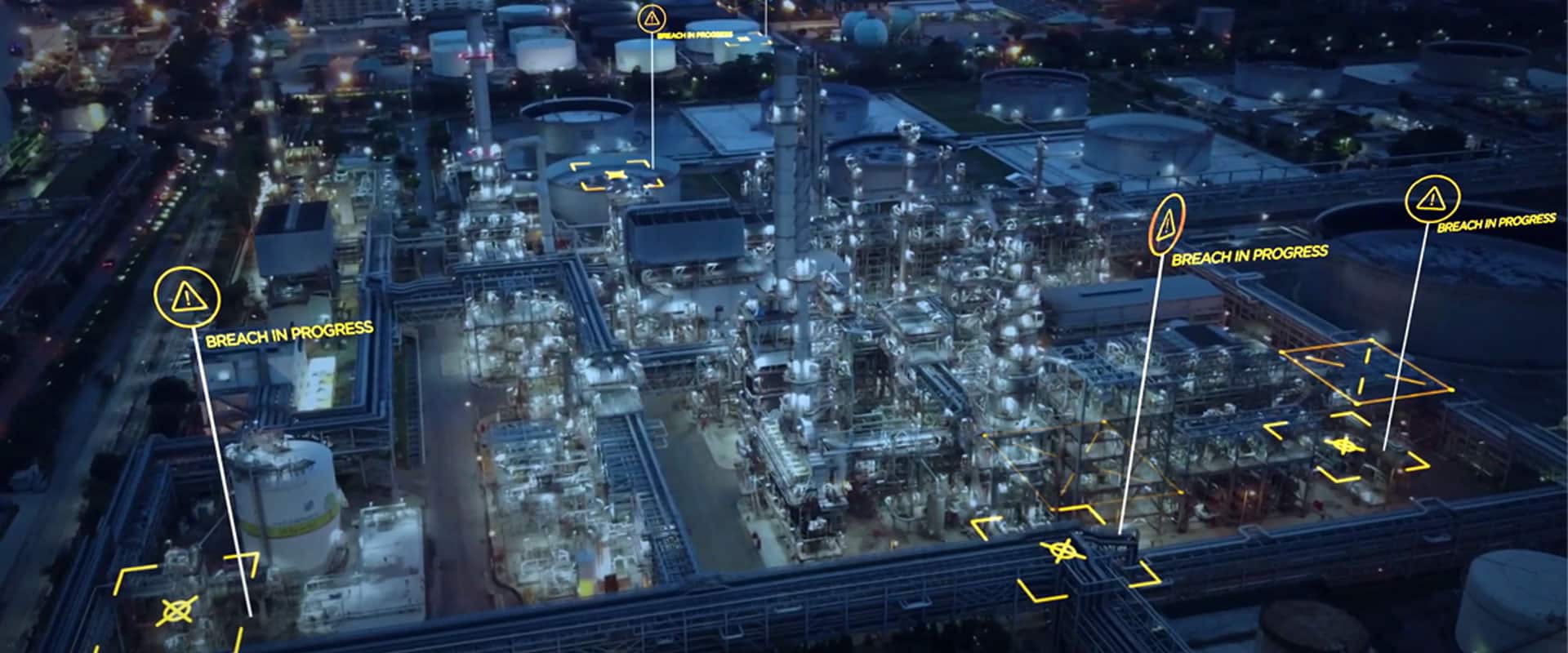
Cybersecurity for Smart Factories: Defending Industrial IoT
28 September
The factory floor is getting smarter.
Connected machinery, sensors, robotics, automated production lines and industrial control systems are transforming manufacturing. Data that once stayed within individual machines can now flow across production networks, cloud platforms and business systems.
The result is greater visibility, automation and efficiency.
But there is another side to this transformation.
Every connected device can potentially become another route into your organisation.
For smart factories, cybersecurity is no longer simply an IT concern. It is increasingly an operational resilience issue.
The Industrial IoT Attack Surface Is Expanding
Industrial IoT (IIoT) has introduced thousands of connected devices into environments that were never designed to be connected in the way they are today.
Sensors monitor production. PLCs control machinery. Industrial robots communicate with systems across the factory. Remote access allows engineers and suppliers to troubleshoot equipment without being physically onsite.
Each connection can introduce risk.
The challenge is that many organisations don’t have complete visibility of everything connected to their industrial environment.
You can’t protect what you can’t see.
IT Security Doesn’t Always Translate to the Factory Floor
Traditional IT environments can often be patched, replaced or taken offline when a vulnerability is discovered.
Industrial environments are different.
A production line may need to operate continuously. Equipment can have long lifecycles. Some systems may run outdated software or legacy protocols. Patching can require extensive testing — and taking a critical system offline could have a direct impact on production.
This creates a difficult balance:
How do you reduce cyber risk without disrupting operations?
Security teams need to understand the operational environment before making changes.
IT Security Doesn’t Always Translate to the Factory Floor
Traditional IT environments can often be patched, replaced or taken offline when a vulnerability is discovered.
Industrial environments are different.
A production line may need to operate continuously. Equipment can have long lifecycles. Some systems may run outdated software or legacy protocols. Patching can require extensive testing — and taking a critical system offline could have a direct impact on production.
This creates a difficult balance:
How do you reduce cyber risk without disrupting operations?
Security teams need to understand the operational environment before making changes.
The Biggest Risk Isn’t Always the Device
It’s tempting to focus on individual vulnerabilities.
But a vulnerability doesn’t necessarily equal an attack.
The bigger concern is what happens when weaknesses are connected.
Consider a simplified attack path:
Compromised user account → IT network → poorly segmented environment → industrial network → critical production system
Each individual weakness might appear manageable.
Together, they could create a route towards something much more valuable.
That’s why smart factory security needs to look beyond vulnerability counts and understand how an attacker could move through the environment.
Segmentation Has Never Been More Important
A smart factory shouldn’t operate as one flat network.
Effective segmentation can help limit the impact of a compromised device or account by controlling how systems communicate with each other.
For example, organisations may need to separate:
- Corporate IT
- Production networks
- Industrial control systems
- IoT and IIoT devices
- Guest networks
- Remote access
- Third-party connections
The objective isn’t simply to create more network zones.
It’s to control which systems can communicate, why they need to communicate and what happens if one area is compromised.
Remote Access Creates Another Door
Modern manufacturing increasingly relies on remote engineers, suppliers and technology partners.
Remote access can be essential for maintaining equipment and resolving production issues.
But every remote connection introduces another potential entry point.
Organisations should be asking:
Who has access?
What can they access?
Is access still required?
How is it authenticated?
Is activity monitored?
A third-party account with access to a production environment can represent a very different level of risk from an account with access to a standard business application.
Access should be proportionate to the operational requirement.
Legacy Technology Meets Modern Threats
One of the biggest challenges for manufacturers is the coexistence of old and new technology.
A factory may contain decades-old industrial equipment alongside modern cloud platforms, connected sensors and AI-driven systems.
Replacing legacy equipment isn’t always commercially or operationally realistic.
This means security controls often need to work around technology that cannot easily be upgraded.
That makes visibility, segmentation, monitoring and compensating controls particularly important.
Detection Matters as Much as Prevention
No security strategy can guarantee that an attacker will never gain access.
The question is:
What happens when they do?
Smart factories need visibility across both traditional IT environments and industrial networks.
Unusual authentication activity, unexpected communications between systems, suspicious remote access or abnormal device behaviour could all provide important indicators.
The faster an organisation can identify unusual activity, the greater the opportunity to contain it before it becomes an operational incident.
Test the Factory Like an Attacker
Security assessments shouldn’t stop at identifying vulnerabilities.
A more useful question is:
“If an attacker compromised this system, where could they go next?”
Threat emulation and attack-path analysis can help organisations understand how weaknesses could potentially be chained together.
This can uncover issues that a traditional vulnerability scan may not reveal — particularly where the risk comes from the relationship between systems rather than a single vulnerability.
Testing can also help validate whether existing controls actually work as expected.
Can an attacker move between network segments?
Can compromised credentials provide access to sensitive systems?
Can remote access be abused?
Can security controls detect suspicious activity?
These are the questions that matter when assessing real-world resilience.
The Smart Factory Needs a Smarter Security Strategy
Industrial IoT can deliver enormous benefits.
But connectivity changes the risk equation.
The more connected the factory becomes, the more important it is to understand what is connected, how systems interact and where an attacker could move if one component is compromised.
The future of manufacturing will be increasingly connected.
Cybersecurity needs to evolve alongside it.
Don’t just ask whether your factory is connected. Ask whether you understand the attack paths that connection has created.
At ANSecurity, we help organisations assess vulnerabilities, understand attack paths and test their security controls against realistic threats — helping security teams focus on the risks that could have the greatest operational impact.
Because a smart factory needs more than smart technology. It needs security designed around how the factory actually works.